
Beyond classification.
HC stands for Hors Catégorie — the classification given in cycling to the climbs that don’t fit the standard rating system. The ones that are too hard, too long, or too remarkable to be measured against anything else. Beyond category.
It’s also the initials of Heather and Chris, who founded Onyx and build every van that leaves the workshop. That’s not a coincidence. An HC build is the most personal thing we make — a van that carries their names in more ways than one.
What an HC build actually is
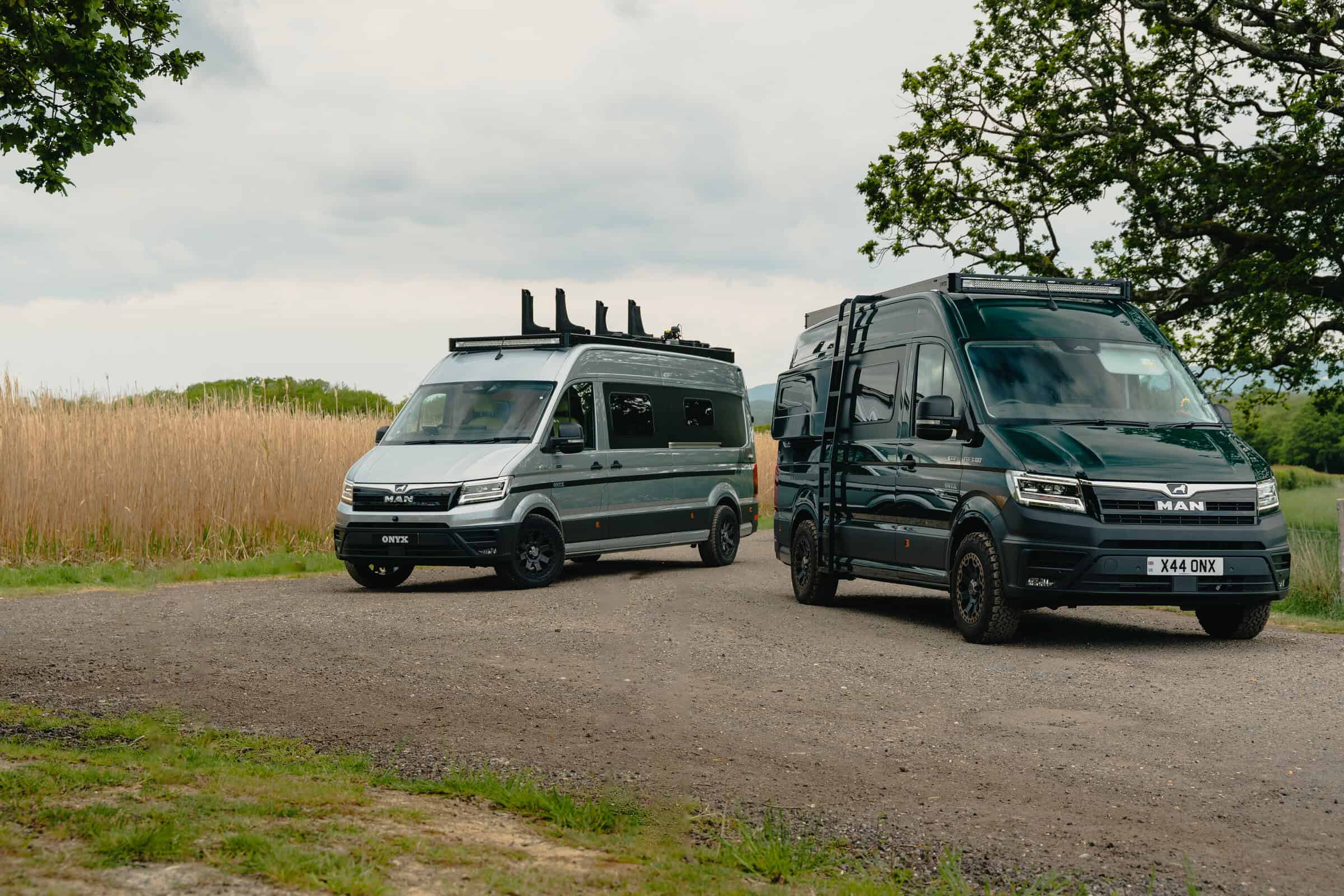
An HC build starts from the MAN TGE platform — the same platform as our standard models — and is built in the same workshop, by the same team, to the same standard. The materials, the electrical systems, the fabrication quality — all of it is consistent with everything else we make.
What changes is the layout. Where the standard models offer proven configurations that work exceptionally well for most buyers, an HC build starts with your brief. A different bed orientation. A layout built around a specific piece of kit. A shower room in a different position. A seating configuration for a particular group of people. Whatever it is that the standard models can’t quite do, that’s where HC begins.
There are still constraints — the MAN TGE platform dictates where the systems sit, and our materials and finishes are the same across all our builds. HC isn’t an opportunity to start from a blank sheet of paper. It’s an opportunity to do something specific within a framework we know works.
The HC builds
Every HC build is numbered. Each one is a specific commission for a specific person, built once.
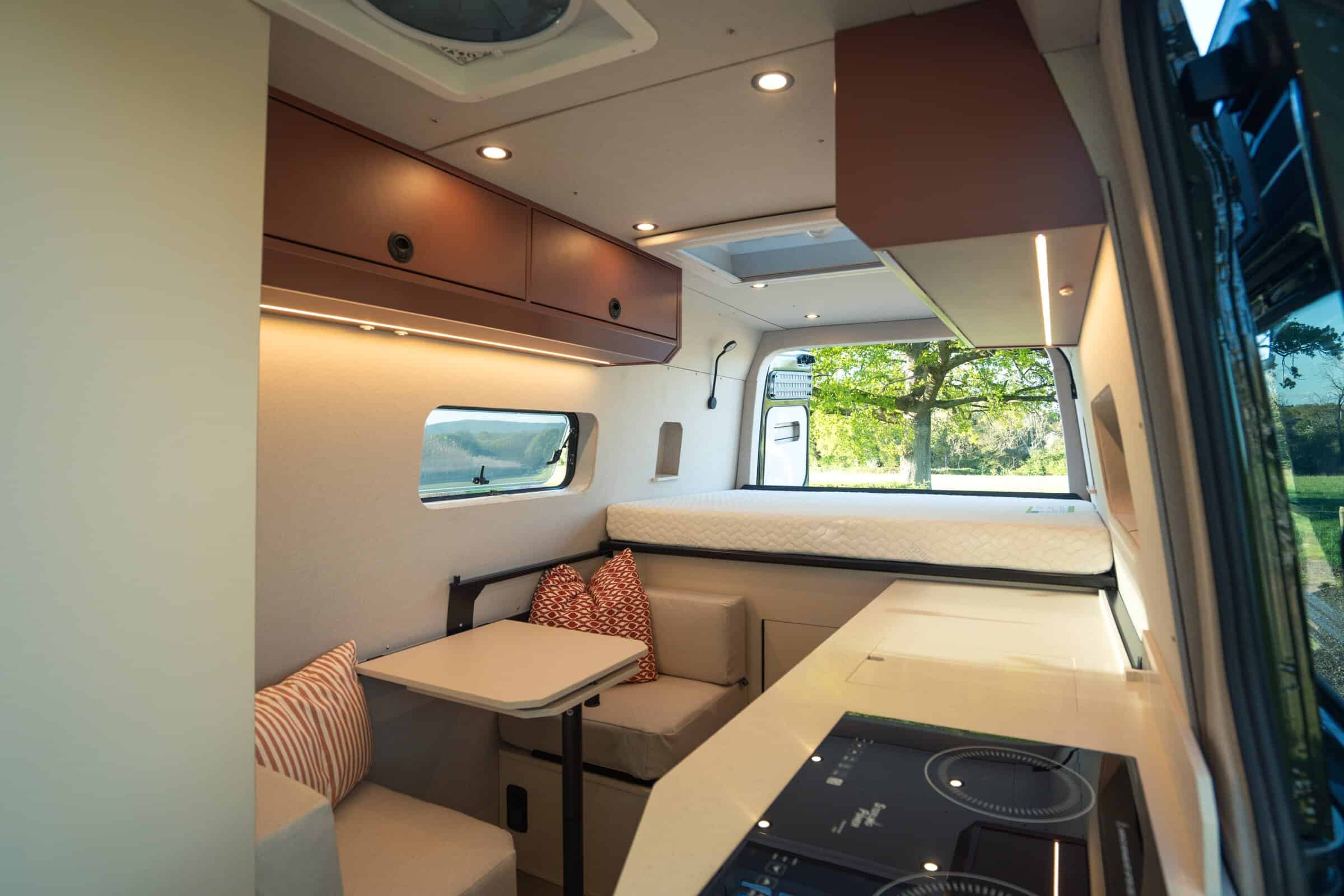
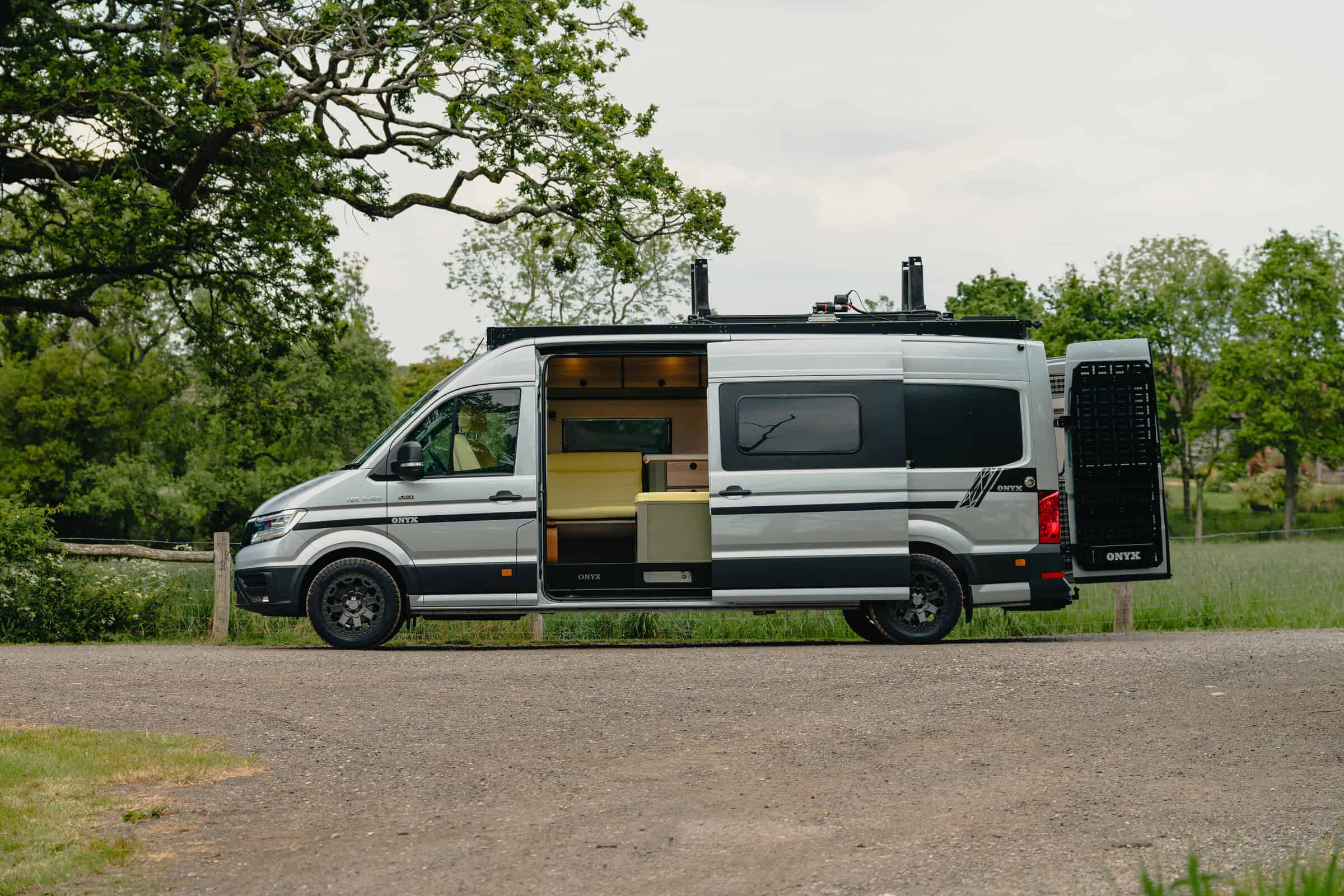
Two recent HC commissions went on to become standard models — the Arête and the Outpost. Most HC builds stay exactly what they are: a single van, built once. Occasionally one answers a question enough buyers are asking that it earns a place in the range.
How it works
An HC build usually starts with a discovery call — the same relaxed conversation we have with every buyer, but often longer, because people who come to HC tend to have a clear idea of what they want and it takes time to work through it properly. A workshop visit is often the natural next step, where you can see the standard builds in person and start to understand what’s possible within the platform.
From there we’ll come back to you with an indicative price and a proposed layout. That’s the point at which the real conversation starts — working through the details, the options, and the trade-offs until the brief is exactly right. We don’t begin a build until we’re both confident the van we’re building is the right one.
For a front-wheel drive medium wheelbase van; £142,500 for a medium wheelbase 4×4, £147,500 for a long wheelbase, and £152,500 for a long wheelbase 4×4. Most builds come in above that, depending on specification, platform, and the complexity of the layout. If you’re looking for a way into an Onyx van at a lower price point, our standard models are the right place to start.
We take on one or two HC builds a year alongside our standard model programme. If you’re considering one, the sooner you get in touch the better — not as a sales tactic, but because lead times are real and the diary fills.
Questions worth asking
What’s the difference between a model build and a custom build?
+
Our standard models are complete, thoroughly developed campervans — years of building vans on the MAN TGE platform, listening to buyers, and refining what works have gone into them. For the majority of buyers, one of them is the right answer, with a substantial options list to tailor the specification to their trips.
A custom build is for the situations where neither model quite fits — an unusual use case, a specific layout requirement, or a brief that genuinely can’t be met by the standard models with options. It’s not a cheaper route into an Onyx van, and it’s not unlimited options with no constraints. It’s a considered process for a small number of buyers each year, and it starts from £137,500 inc VAT for a medium wheelbase front-wheel drive van, or £147,500 for a long wheelbase.
How do I know if I need a custom build or a standard model?
+
The honest answer is that most buyers who arrive thinking they need a custom build find that one of the standard models covers everything they’re looking for — often with options rather than a bespoke layout. It’s worth going through the model pages and their options lists carefully before assuming a custom build is necessary.
The clearest signal that a custom build is the right route is when you have a specific requirement that can’t be met by either model — a different bed orientation, a layout built around a particular piece of kit, or a configuration for a specific group of people that the standard models don’t address. If you’re not sure, tell us what you’re trying to achieve on a discovery call and we’ll give you an honest answer quickly.
Can I see examples of previous custom builds?
+
Yes — this page shows the completed HC builds with photography and a description of the brief behind each one. HC 001 and HC 002 are completed builds with full photography. Every HC build is numbered and built once, for one person.
Is a custom build more expensive than a model?
+
Yes, almost always. Custom builds start from £137,500 inc VAT for a front-wheel drive medium wheelbase van, or £147,500 for a long wheelbase, and most come in above that depending on specification, platform, and layout complexity. The design process adds time before the build itself begins, and that time is reflected in the cost.
If cost is a primary consideration, the model builds with options are almost certainly the better route — the standard models are priced to reflect the efficiency of a refined, repeatable process that a bespoke build doesn’t have.
How long does a custom build take?
+
Longer than a model build, and the honest answer is that the timeline depends on our schedule at the point you come to us. Our standard model builds run to a four to six month lead time from order to delivery. A custom build adds a design and sign-off phase before the build begins, so the total will be longer than that. If you have a specific date in mind, tell us early and we’ll give you a realistic picture of what’s achievable.
Can I customise a standard model without going full custom?
+
Yes — and for most buyers, this is the better answer. Each of the standard models has a substantial options list covering electrical upgrades, climate control, external equipment, internal additions, and base vehicle factory options. The majority of buyers who arrive thinking they need a custom build find that a model with the right options covers everything they were looking for.
It’s worth going through the options list on each model page before a discovery call — most people find it answers this question before we even speak.
What’s the process for a custom build?
+
It starts the same way as a model build — a discovery call to understand your brief, your trips, and what you’re actually trying to achieve. If a custom build is the right route, we move into a design phase: working through the layout, the systems, the specification, and the details until the brief is fully resolved. Once the design and price are agreed, we confirm the build slot and the project begins.
The people designing your van are the same people building it. There’s no handoff between a sales team and a build team — the conversation you have at the start carries through to the finished van.
Why the MAN TGE over the VW Crafter or Mercedes Sprinter?
+
The MAN TGE isn’t the most familiar choice — most people arrive expecting a Sprinter — but it’s the right platform for what we build, and the reasons are practical.
Against the Sprinter, it’s comparable in quality and capability at a slightly lower base price, which means more of your budget goes into the build rather than the base vehicle.
Against the VW Crafter, the more important difference is support. The MAN TGE is the commercial vehicle version of the same platform, which means it’s backed by MAN’s truck dealer network — service centres across the UK and throughout Europe. For a van you’re taking seriously into remote places, that network matters in a way it doesn’t for a van that stays close to home.
We’ve driven other platforms. We kept coming back to this one.
What warranty do I get with a custom build?
+
The same warranty structure as the model builds — a three-year MAN manufacturer warranty on the base vehicle through the UK and European dealer network, which can be extended to five years at the time of order, and a 12-month Onyx warranty on the build. Each product fitted to the van carries its own manufacturer warranty, and the length varies by product. Every build also comes with a free three-month check-up. The full details are covered in the build agreement.
Is a custom build road legal?
+
Yes. Every Onyx build — model or custom — goes through an Individual Vehicle Approval process and is registered from new as a motorhome. That means it leaves the workshop correctly classified, with all the legal and insurance implications that come with motorhome registration. A panel van registration option is available if preferred, and comes with a small discount on the build price.
Ready to start the conversation?
An HC build begins with a conversation. Tell us what you’re trying to do, and we’ll tell you honestly whether it’s something we can build and what it’s likely to cost.
Not ready to talk yet?Join the list for new models, open build slots and workshop updates.
Not sure HC is right for you?
Most buyers find that one of our four standard models does everything they need — often more. If you haven’t already spent time with the range, it’s worth doing before we talk.