What people asked us at the NEC
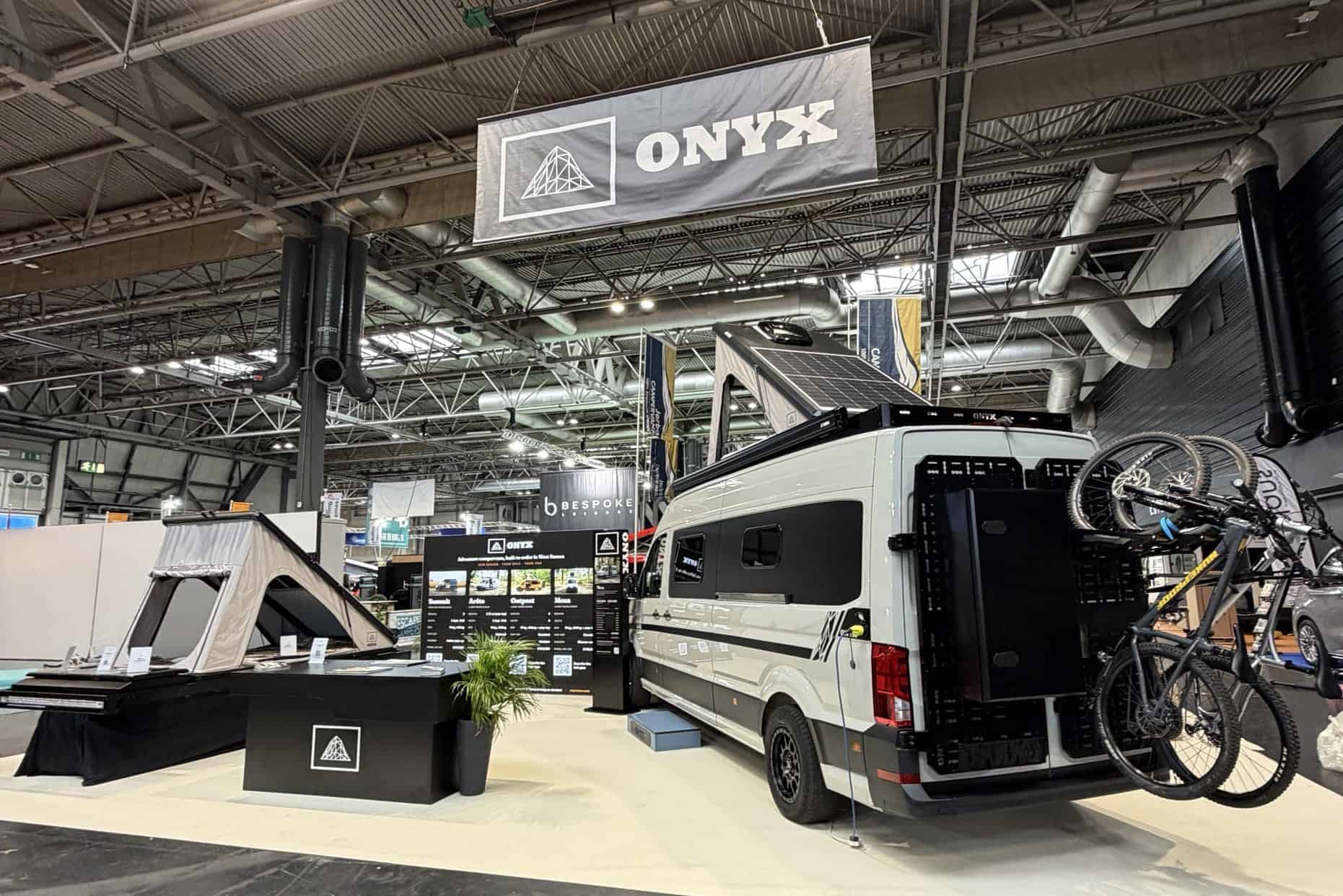
Six days at the Motorhome and Caravan Show at the NEC, a lot of conversations, and the same good questions coming up again and again. Here are the answers.
The NEC is over, the Mesa is home, and we’ve had time to think about the week.
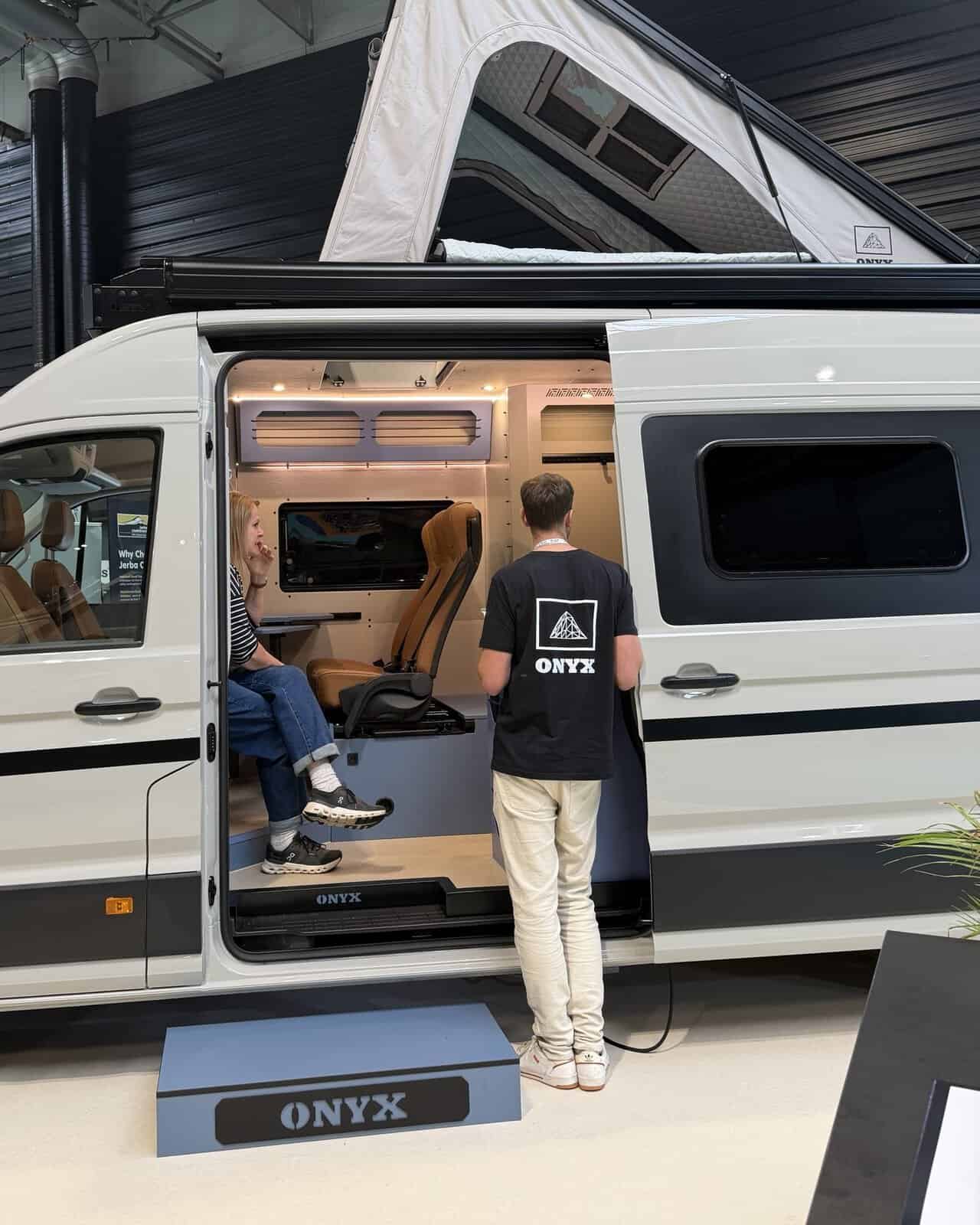
The best part was watching people walk into the van. Most of them slowed down, looked around, and started picturing what they’d do with it. We didn’t even have to ask them what they thought. They offered it up, and the same few words kept coming back:
Robust. Open. Airy. Versatile. Actually usable.
That last one is our favourite. “Actually usable” is the whole point of how we build, and it was good to hear it from people who’d only been inside for five minutes.
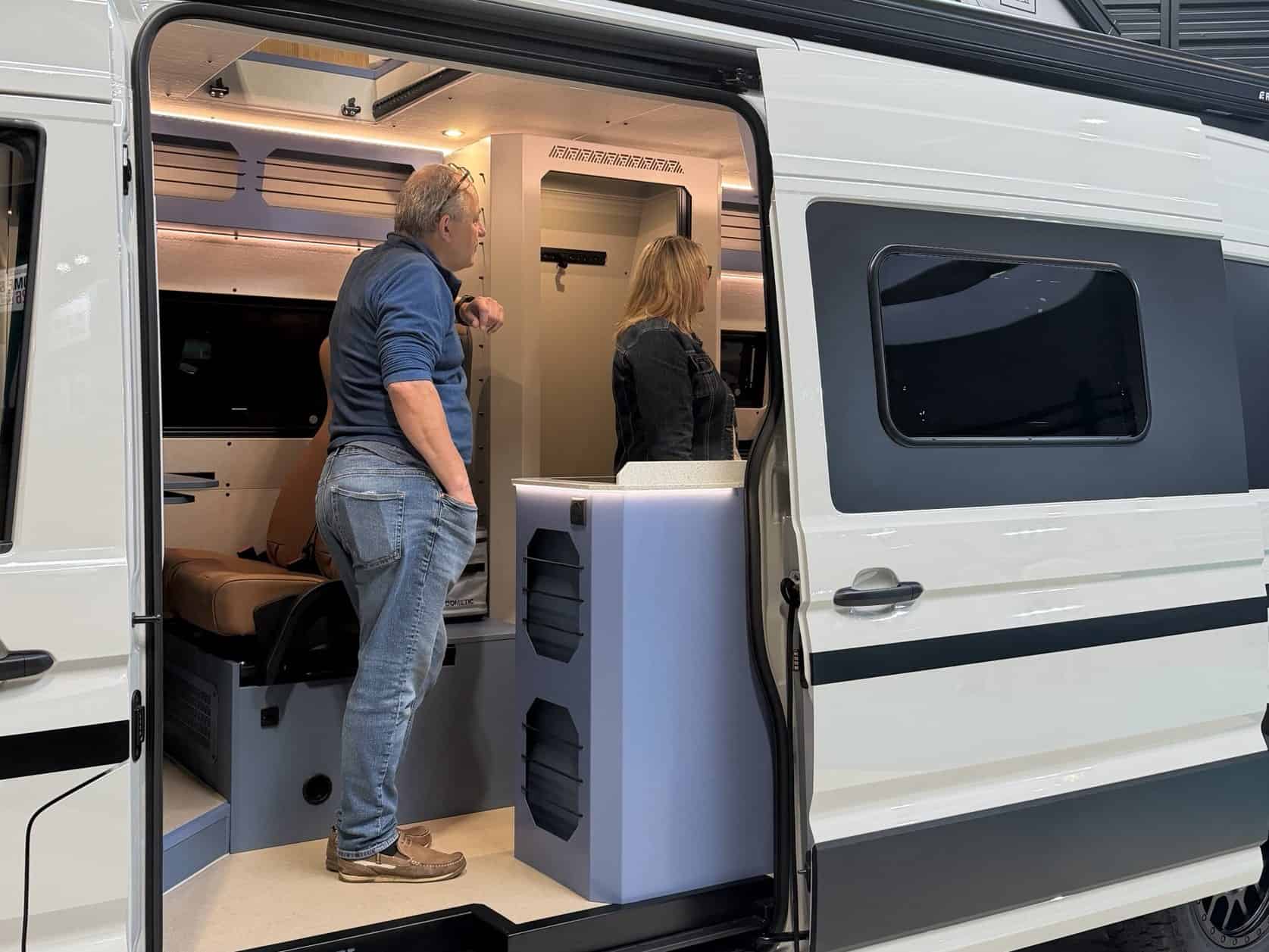
People asked a lot of questions too, and many of them came up again and again. If you were one of the people on the stand, thank you. If you couldn’t make it, here’s what everyone wanted to know.
The big one: can I have it as a two-berth?
This was the question we heard more than any other. We took a four-berth family Mesa to the show, and again and again people asked whether they could have it for just the two of them.
So now you can. The Mesa now comes as a two-berth, from £137,000 inc VAT.
From the bench back, it’s the same van. The shower room, kitchen, sliding bed and garage are all unchanged. What changes is at the front:
- A bench replaces the two rear seats, with storage underneath and a storage drawer
- A Lagun table that swings and swivels to wherever you want it
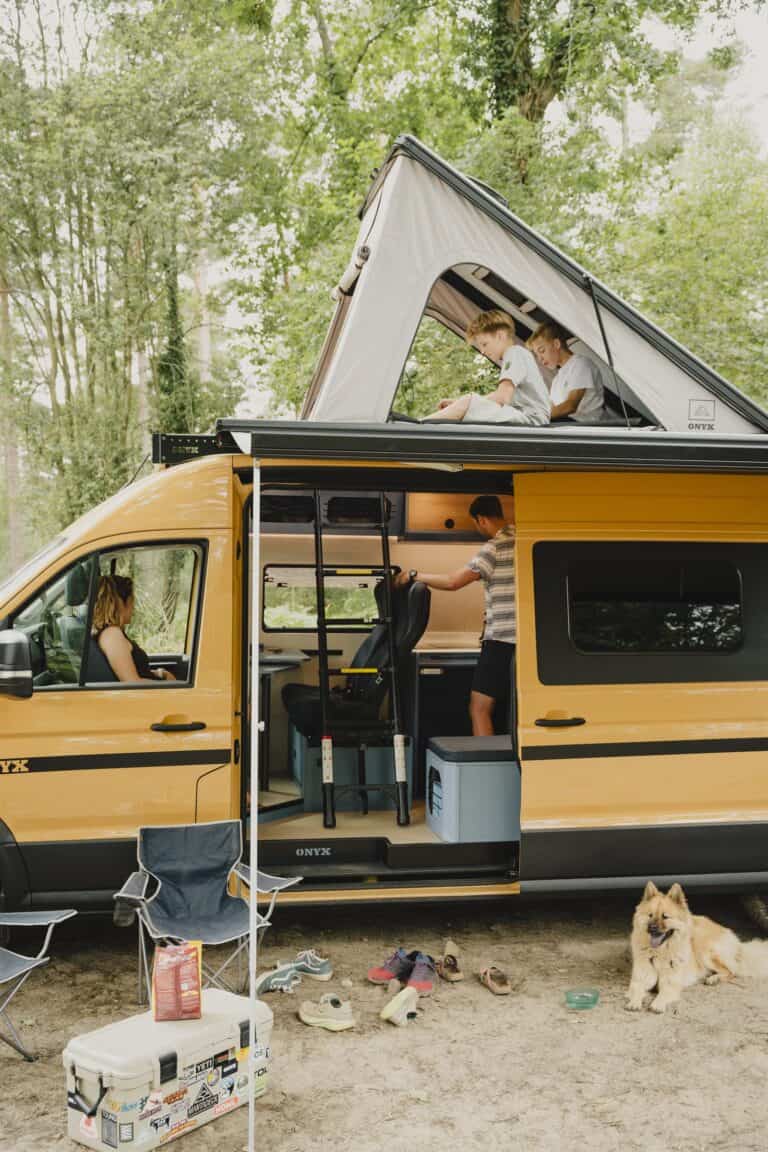
- A fixed roof instead of the pop-top
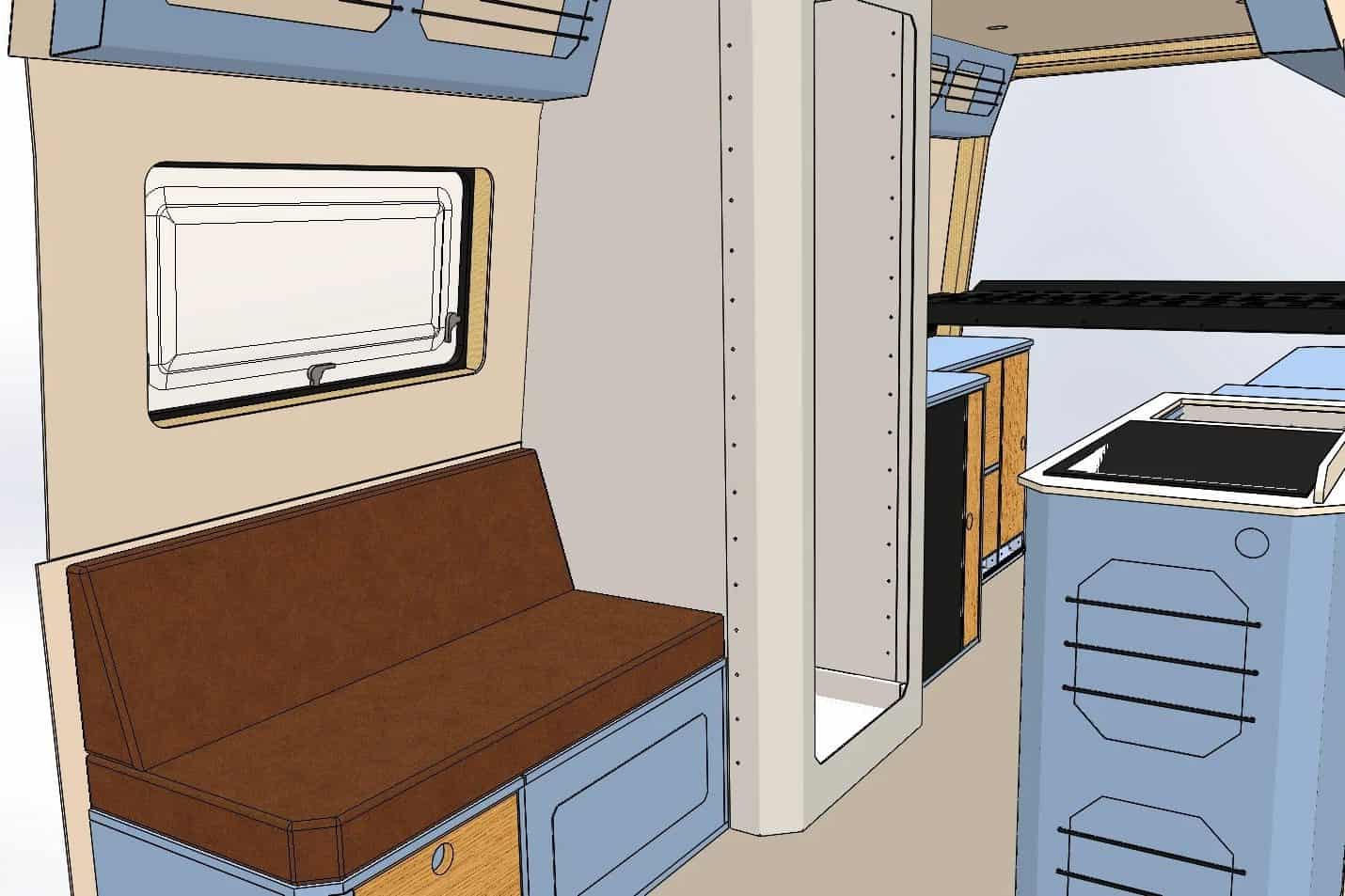
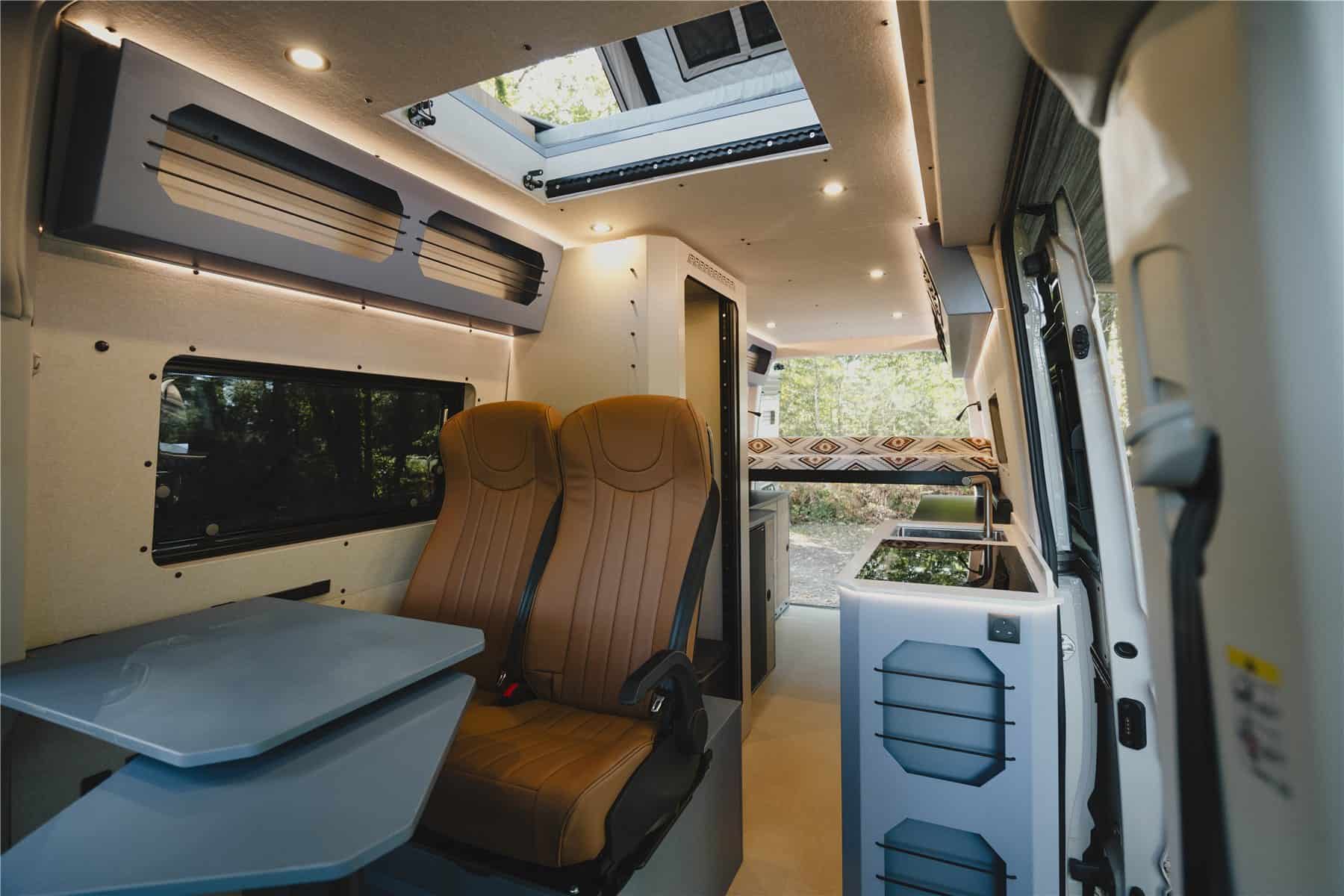
You can also mix the two. Keep the pop-top on a two-berth and it sleeps four while carrying two. Or take it off a family Mesa and keep four seats while sleeping two.
It’s all on the Mesa page, with both layouts in the price builder.
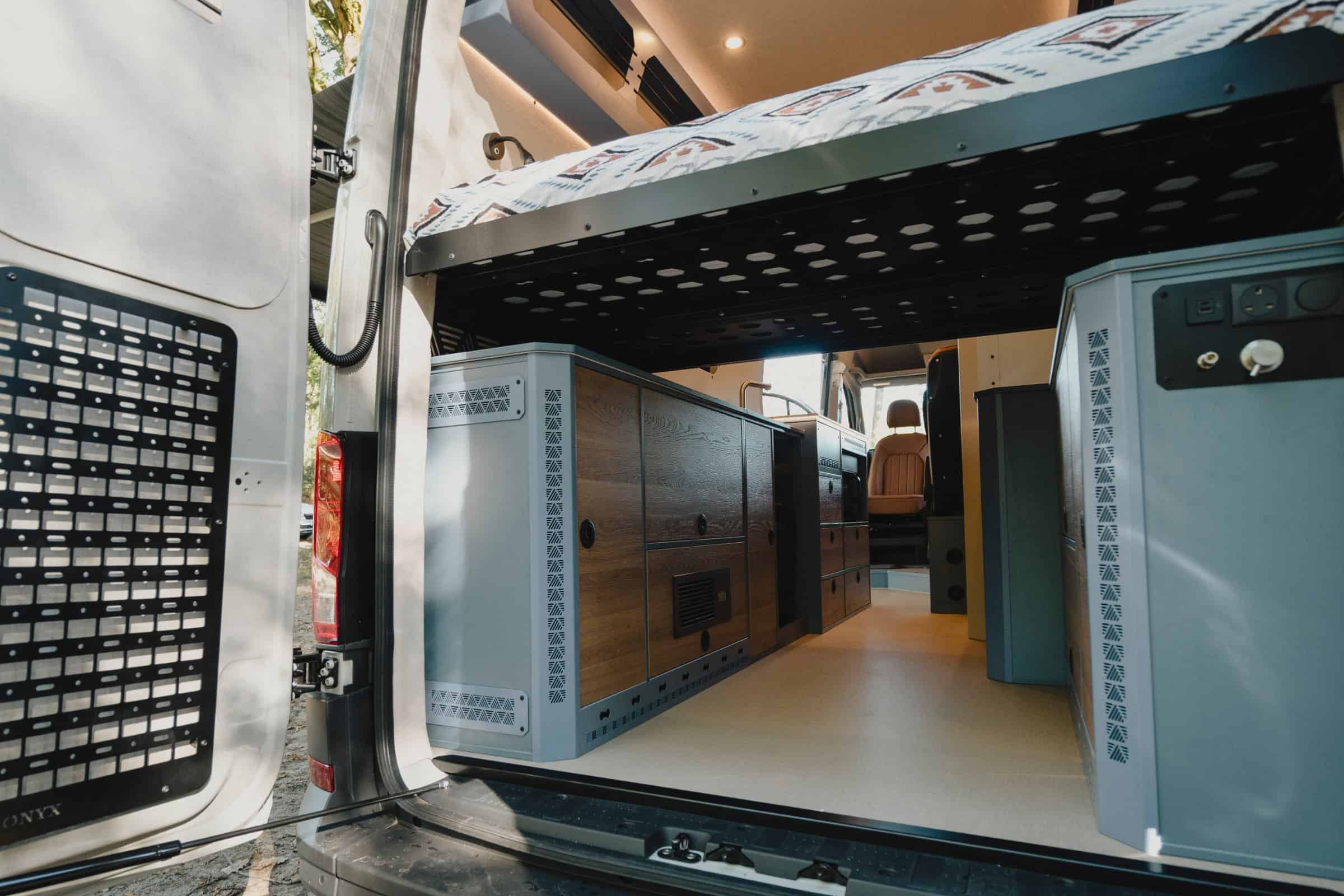
Why is there a gap under the bed?
Because the garage is open all the way through, from one side of the van to the other. That’s deliberate: an open garage is a more versatile one. The gap under the bed takes mountain bike handlebars, so bikes go in without coming apart, or it’s simply more room for storage, with L-track tie-down points so things stay secure.
How does the bed work?
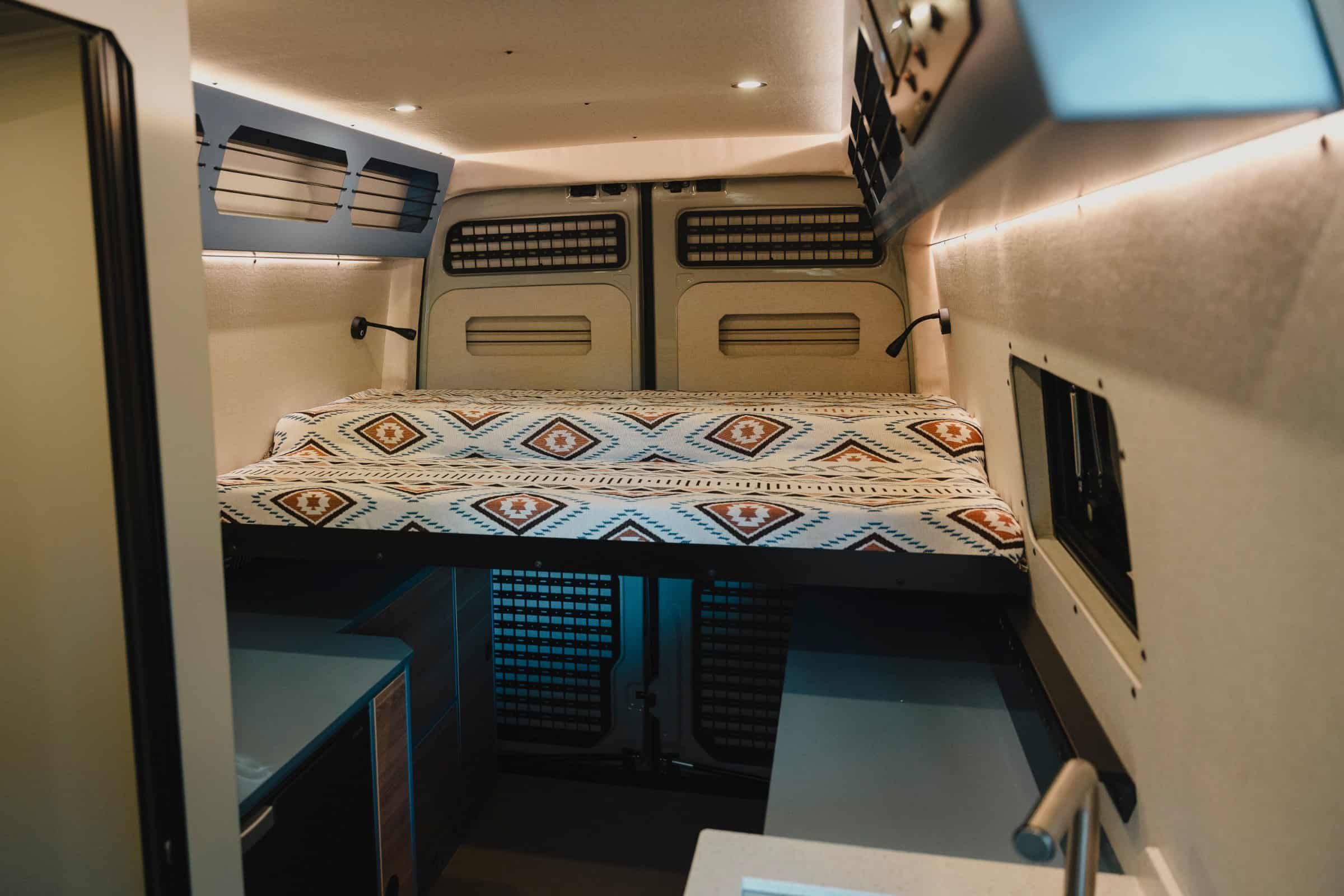
Lots of people assumed the bed lifts up and down, or folds away completely. It does neither. It slides out into a king-size bed.
That means the garage underneath stays usable all the time, whether the bed is in or out. Fill it with kit, or give it to the dog, or to whatever else you travel with.
What’s the furniture made from?
A mix of aluminium and HPL (high-pressure laminate) on lightweight ply. The aluminium goes on the corners, which are the places you’re most likely to knock with a bag or a boot. The HPL has a durable finish that holds up well over years of use, and the lightweight ply underneath helps keep the weight of the van down.
The overhead lockers are folded aluminium, and they’re sized well for packing cubes. We think they’re a big part of why the van feels so light and airy, and they’re practical too.
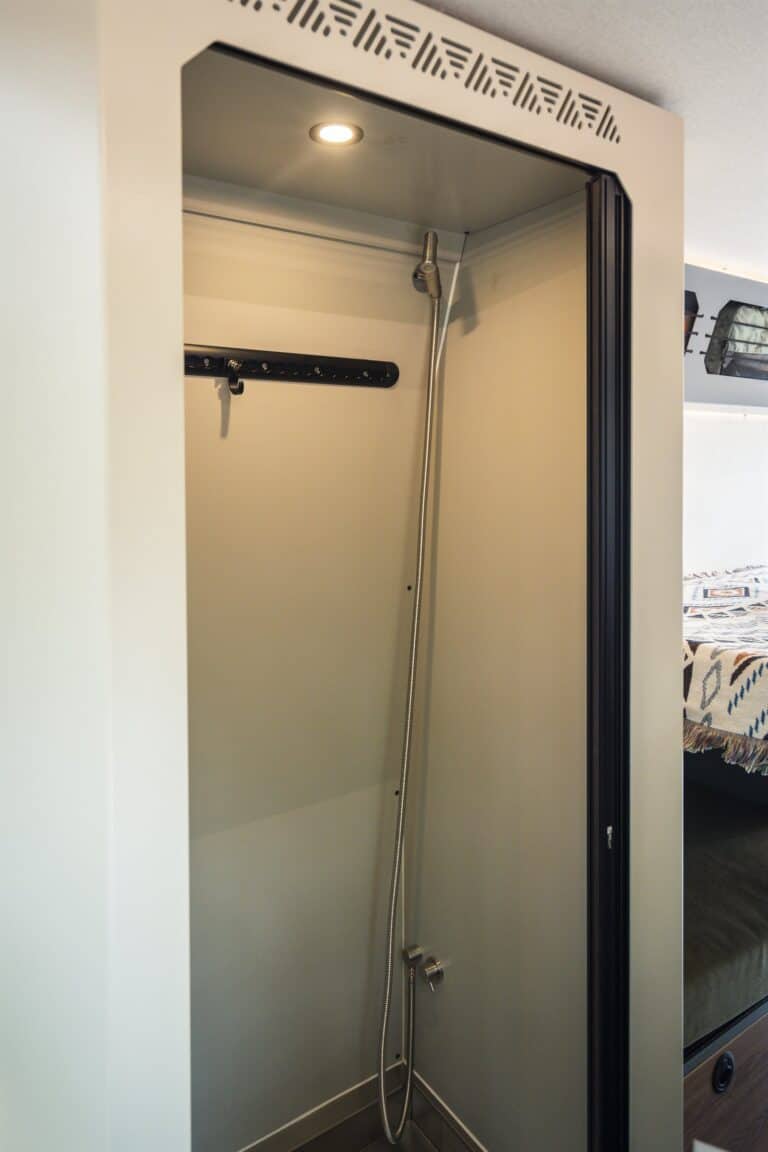
Why is there L-track in the shower?
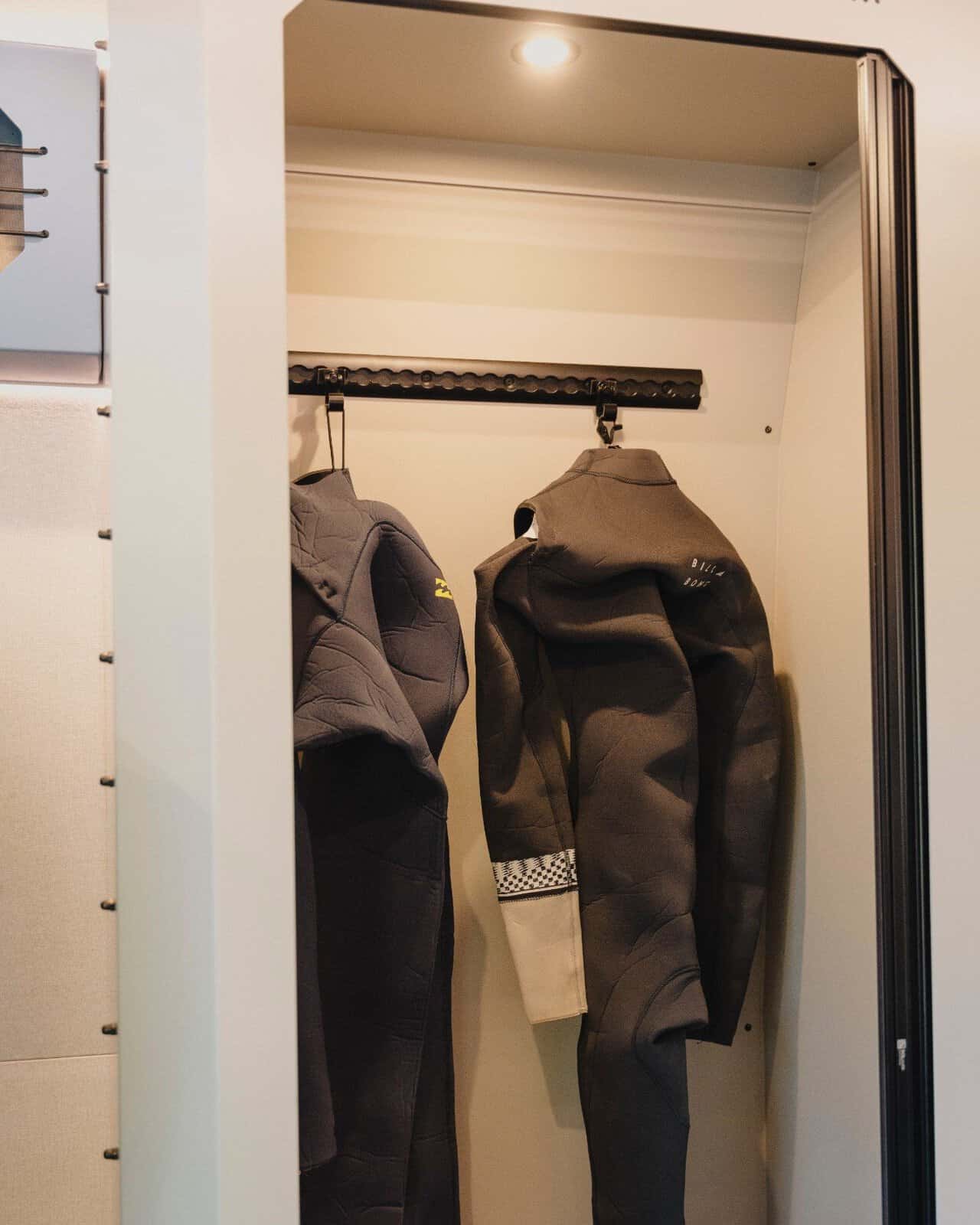
To make the shower room more versatile. With L-track on the walls you can put up a drying rack, or hang your towels, your wetsuits or a shower caddy (ours is coming soon).
It also means the shower room is useful when nobody’s showering in it. Strap kit to the track and it becomes extra storage on the drive.
Why a removable toilet?
For the same reason: flexibility. When you want to shower, lift the toilet out of the shower tray and you have plenty of room to move around. When you want to use it, or just store it, it lives in there.
Can I have it without the pop-top? Can I have a bench instead of the two extra seats?
Yes, and yes. That’s the new two-berth layout above, and you can pick either change on its own too.
Is it gas-free?
Yes. Always, on every van we build.
Can it go off-grid?
Yes, always. Every van comes with solar, batteries, DC-DC charging (so the batteries charge while you drive) and a 3kVA inverter as standard. If you want more capacity, upgrades are available.
How long can I stay off-grid?
In summer, power is fairly indefinite, so it comes down to how much water you use. One owner told us they’ve spent 60 nights away since March without plugging in once.
In winter, we’d say around three days before you need to move the van to top up the batteries, depending on how much cooking you do.
Here’s what you have to work with. For power, there’s 400Ah of lithium batteries, topped up by 350W or 400W of solar on the roof, depending on the van, and by a 50A DC-DC charger whenever you drive. For water, there’s 109 litres of fresh water and a 63-litre grey tank. The heating and hot water run on diesel from the van’s main fuel tank, so there’s no gas bottle to run out on a cold night.
Can I go bespoke?
You get to spec the van, from the equipment and options to the colours and finishes.
The layout stays the same, although we can make small changes on each build. Keeping it standard is how we can build each one this well.
4×4 or front-wheel drive?
A number of people told us they’d go for the 4×4 simply because it’s only £5,000 more, so why not? While it may seem like a no-brainer, there are trade-offs. In particular, you lose about 10cm of headroom in the 4×4. So it comes down to how you’ll use the van, and whether headroom or off-road ability matters more to you.
Choose 4×4 if you’re planning off-road adventures, on muddy tracks or to wild campsites.
Choose front-wheel drive if you mostly stick to roads and campsites. It’s very capable, even on mountain passes in winter, and if you’re tall you may prefer to keep the headroom.
We’re always happy to talk through which one suits how you travel.
What licence do I need, and how much can I carry?
We register all our long-wheelbase vans at 4 tonnes. We do that so you get plenty of payload, which is the weight of people, kit, water and everything else you can load in. The exact figure depends on your options, so we’ll go through it with you on your discovery call.
A 4-tonne van needs a C1 entitlement on your licence. If you passed your car test before 1997, you probably already have it. Check the back of your photocard for “C1”. If you passed later, you’ll need to take the C1 test.
If you’d rather not drive a 4-tonne vehicle, a front-wheel-drive Arête or a two-berth Mesa might be possible at a lower weight. Please talk to us about it first, because it depends on the spec and it may not be possible.
Can I use it in winter?
Yes. The van is insulated throughout, and the fresh and grey water tanks are insulated and heated, so it’s comfortable in normal winter use. Arctic trips need a bit more planning.
Pop-tops are the one part that will be cold in winter, although they do come with insulating layers. If you’re planning serious cold-weather trips, talk to us and we’ll go through how to set the van up for them.
How long is the wait?
At the moment, a van ordered now would start its build in April and be handed over in late May. If you’d like to talk it through, book a discovery call. You can also see how the process works, from first call to handover.
Do you offer finance?
We don’t provide finance ourselves. Some companies do offer finance for this kind of purchase, so it’s worth looking into if that’s how you’d like to buy.
What’s the warranty?
The MAN TGE base vehicle comes with a three-year manufacturer warranty through the MAN dealer network across the UK and Europe. You can extend it to five years when you order.
Our build is covered by a 12-month Onyx warranty, and each product fitted to the van carries its own manufacturer warranty. Every completed build also comes with a free three-month check-up.
Thank you
To everyone who came to the stand, asked questions, sat in the bed and opened every door: thank you. It was a brilliant week.
If you’re still thinking about it, have a look at the Mesa, or book a discovery call. It’s a relaxed conversation about how you travel and which van fits it.